Heat pumps:
recovery of waste heat
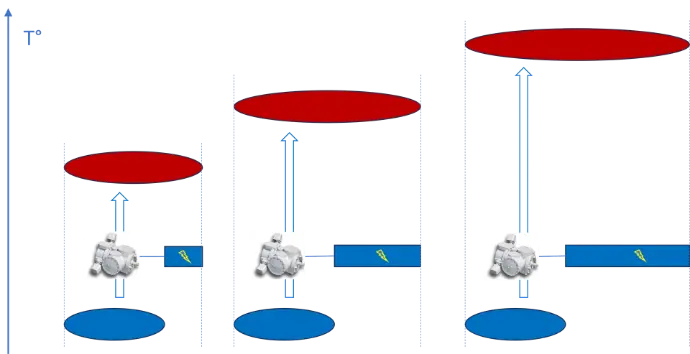
A heat pump raises the temperature at which a quantity of heat already present can be utilised.
AIREDIF
positions itself as your preferred ally for the implementation of your heat pump project :
- first of all, we offer you the most suitable heat exchanger for the heat source available to you,
- then, we offer a variety of heat pump solutions, all using natural fluids such as ammonia or CO2,
- finally, our selection of heat exchangers also allows for the reinjection of heat into the industrial process.
Each project has its own characteristics, and its success is linked to good communication.
Principles and constraints
A heat pump does not create heat, nor does it transform energy.
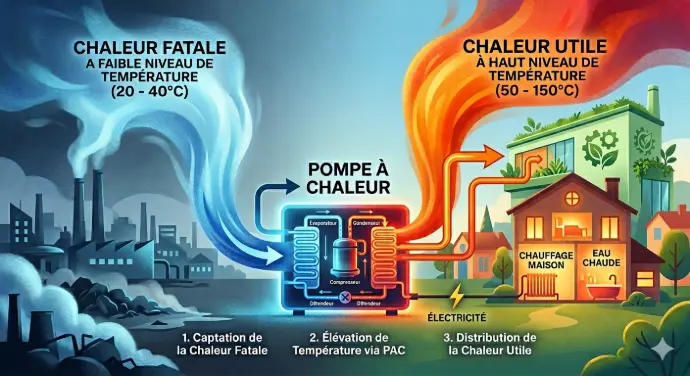
A heat pump raises the temperature level at which a quantity of pre-existing heat (the source) is made available (the sink).
The amount of work (absorbed power) required depends on the temperature increase to be achieved : the greater the increase, the more work will be needed..
The work required for this increase in temperature adds to the heat made available.
Ecological importance
In the industrial sector, heat pumps play a key role in the decarbonisation of thermal processes, often based on fossil fuels. By recovering waste heat from effluents or drawing it from the environment, they transform losses into resources for heating and drying.
This method reduces the carbon footprint by replacing gas and oil with electricity, potentially renewable. The use of natural fluids, as seen at AIREDIF, minimises environmental and regulatory risks associated with refrigerant gases.
After optimising the heat utilisation temperatures, heat pumps double the energy efficiency of processes. Their adoption helps industries comply with environmental regulations while stabilising their energy costs.
These technologies transform ecological challenges into competitive advantages, essential for achieving carbon neutrality by 2050.
Political and monetary importance
For countries lacking hydrocarbons, industrial heat pumps are a strategic instrument of national sovereignty and economic stability. They allow for the substitution of costly imports of gas or oil with the utilisation of local thermal resources, thereby reducing geopolitical dependence. This transition decreases the vulnerability of the trade balance in the face of international price volatility and energy supply crises.
By electrifying industrial heat, these nations are redirecting their energy expenditures towards their own electricity grid, supporting the domestic economy. Investment in this technology creates skilled local jobs in engineering and maintenance, strengthening the national industrial fabric. They provide a structural response to imported inflation by decoupling the cost of industrial production from fluctuations in global fossil markets.
Politically, this strengthens the decision-making autonomy of states, freed from diplomatic pressures related to their energy security.
In the long term, this thermal autonomy is a key pillar of the economic resilience and industrial competitiveness of these countries.
The AIREDIF solutions
In partnership with Vilter by Copeland and Atlantic Compressors, AIREDIF offers a range of heat pumps and industrial thermofrigopumps operating with natural fluids. The Single Screw compressors from Vilter provide power and reliability, requiring little maintenance.
The temperature profiles of the sources and discharges, the nature of the source, the desired power, and the daily or seasonal load profiles are parameters that we take into account in defining the configuration and choosing the working fluid of the heat pump.
Our simulation tools then allow us to refine the initial choice and ultimately define an effective solution.
There are almost as many configurations as there are projects, each project being unique.
However, we can identify some key points and examples:
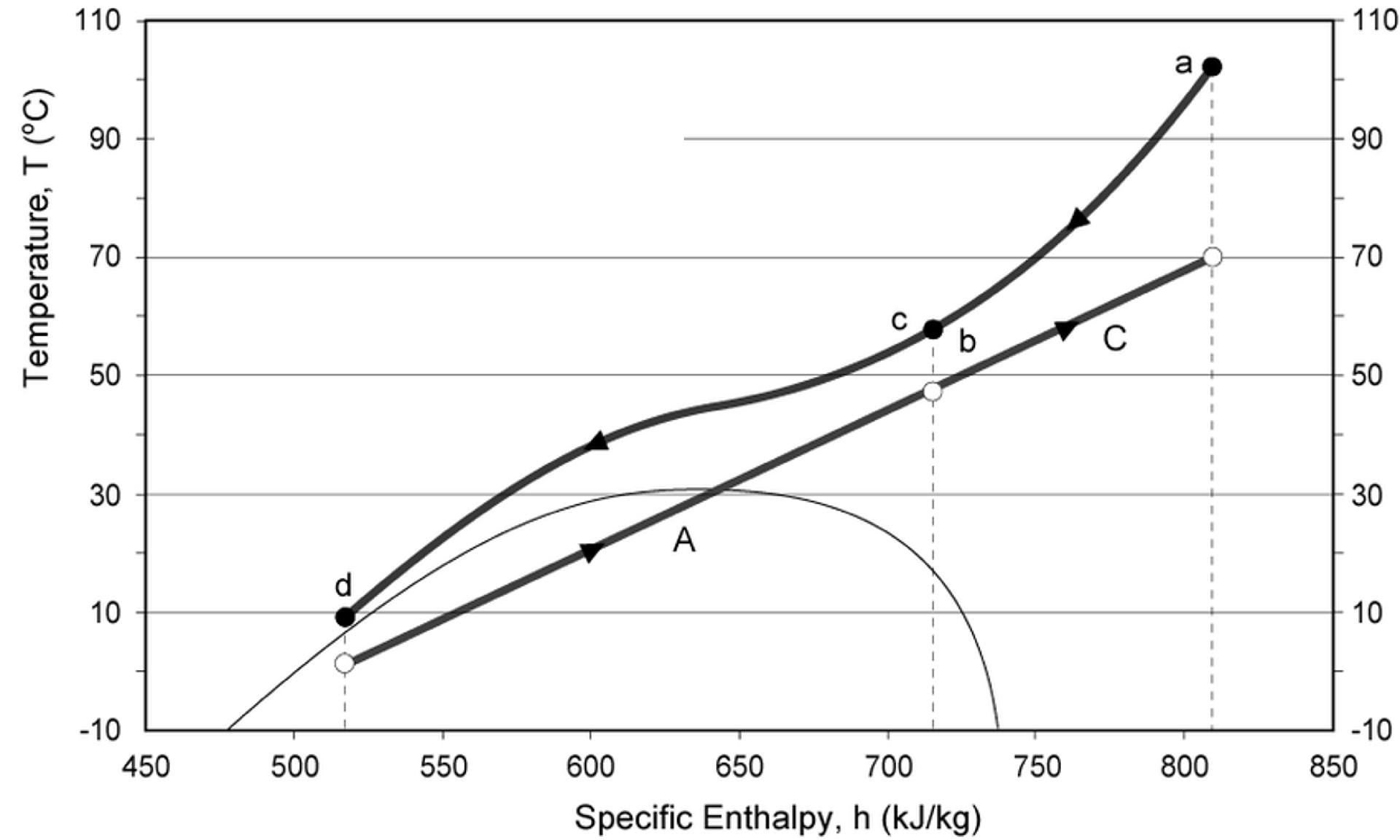
- transcritical CO2 : low-temperature source (<10°C), the discharge has a large temperature range with a moderate final temperature.
Example: sanitary water heating from 10 to 65°C using surface water (sea, river, ...) or the discharge from a refrigeration system operating on CO2 as the heat source.
- Thermofrigopump : simultaneous production of cold and heat. The source of heat is essentially the rejection from a refrigeration system, with a single compressor ensuring the generation of cold and the increase in temperature. When there is no need for heat production, the compressor returns to a conventional refrigeration operation and the waste heat is lost entirely or partially. The heat is recovered at a moderate temperature level.
Example: simultaneous production of glycolated water at -4/ -8°C and hot water at 45/ 65°C.
- Single stage or dual stage : depending on whether the temperature rise is high or not, and the associated pressures, a single stage of compression may be sufficient; otherwise, we can propose two-stage solutions.
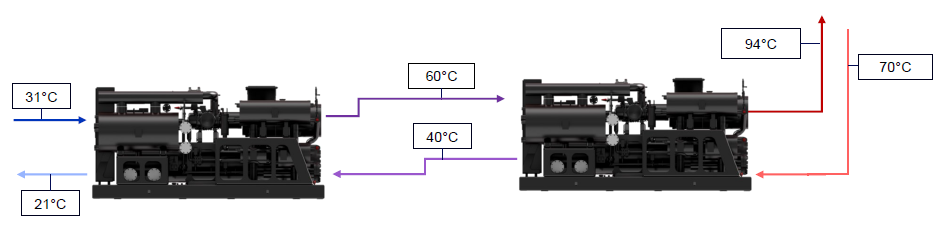
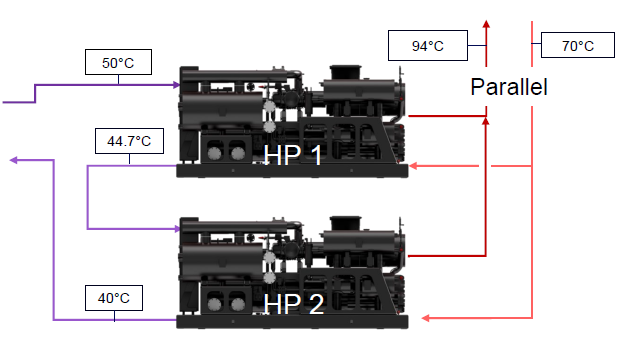
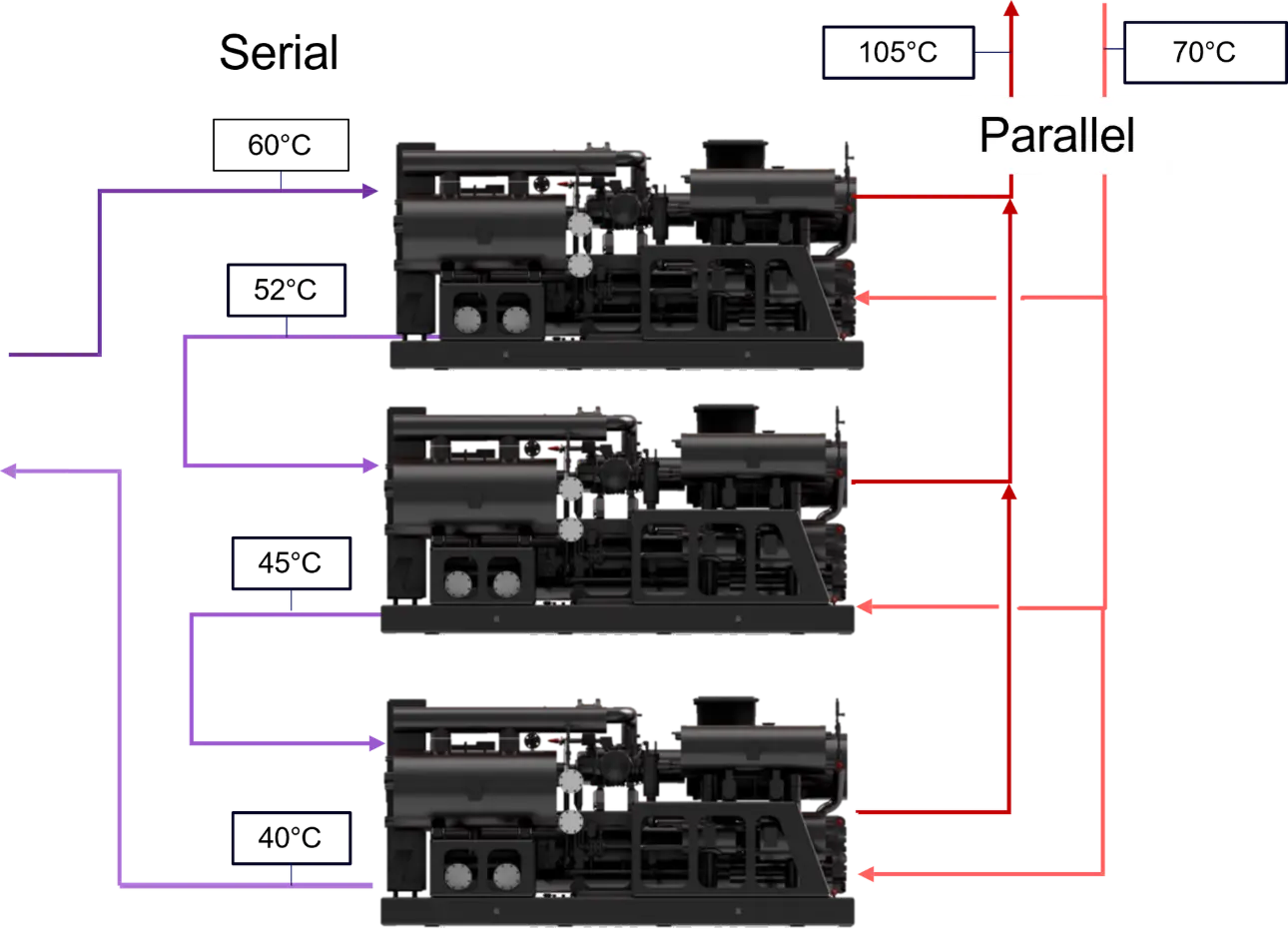
- Low or high temperature difference for the source and/or the rejection: we take advantage of the temperature profiles to offer several machines in parallel or in series on the secondary loops in order to optimise energy performance while ensuring stable operation.
Need help?
We can connect you with specialists in financial support and with consulting firms to conduct a preliminary audit.
Ready to reclaim your waste heat?
Let's turn your vision into reality. Contact us today to put your processes on the path to excellence.